
Monday 30 March 2026Monday 30 March 2026
/
Share
Hessa Street RTA Upgrade And What It Means For Real Estate, Investors And Communities
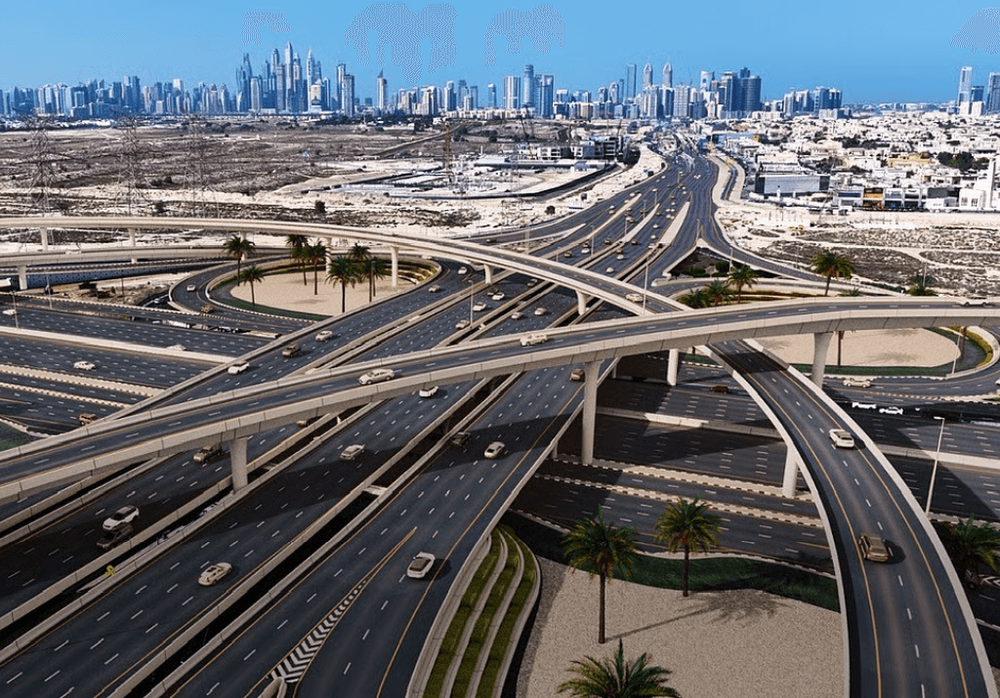
What Is Hessa Street Phase II?
Dubai’s Roads and Transport Authority (RTA) has announced a major upgrade to the Hessa Street corridor - one of the city’s key east-west routes that connects some of its busiest residential and commercial areas.
If you know Dubai well, you’ll know this stretch between Al Khail Road and Sheikh Mohammed Bin Zayed Road can get very busy. It’s surrounded by high-demand communities, and at peak times it can get heavily congested as thousands of residents use it daily. This project is designed to change that completely.
We’re talking about expanding the road from two lanes to four lanes in each direction, adding new flyovers and bridges, and introducing a 480-metre tunnel to smooth out some of the key bottlenecks. Roundabouts are also being replaced with more efficient, signalised junctions to keep traffic moving.
Once complete, the corridor will support a huge volume of daily traffic across communities like JVC, Arjan, Dubai Science Park, Barsha Heights, The Greens, and routes feeding into Dubai Hills.
And in some sections, journey times are expected to drop from around 20-25 minutes down to as little as five.
So while on paper this is a road upgrade, in reality it’s something bigger - it’s a complete shift in how this part of the city moves. Of course, in Dubai, whenever improvements like this are made, they almost always have a direct impact on the property market.
When Will Hessa Street Be Finished?
Phase I of the Hessa Street upgrade has already been completed, delivering early improvements to traffic flow and setting the foundation for the wider corridor transformation.
The remaining works under Phase II are currently underway, with upgrades being delivered in stages along the corridor, including lane expansions, junction improvements and new infrastructure designed to ease congestion.
While a single final completion date for the entire project has not been officially confirmed, the remaining phases are expected to be delivered progressively over the coming years, with benefits already being felt as each section opens.
Why Hessa Street Phase II Matters For Dubai Real Estate
One of the biggest drivers of property demand in Dubai is simple, how easy it is to get from A to B.
Buyers and tenants are no longer just looking at the home itself. They’re asking very practical questions - how long is the commute, how easy is school drop-off, how quickly can I get to work, and how connected is this community to the rest of the city?
So when infrastructure like this improves, it doesn’t just ease traffic. It quietly changes how people view entire areas.
Places that once felt “a bit far out” suddenly feel more accessible. Communities that were previously overlooked start to make sense again, especially for families and professionals who want more space without giving up convenience.
We’ve already seen this happen across Dubai, take Dubai Hills Estate for example, improved road connectivity helped transform it into one of the most in-demand lifestyle communities in the city, because it suddenly felt much more practical for daily commuting while still offering a premium residential setting.
In Town Square Dubai, upgrades to surrounding road networks helped completely shift perception over time - what was once seen as a more distant, value-led community is now a consistent performer for both sales and rentals.
And with Hessa Street itself, we’ve already seen how incremental improvements have supported stronger activity in surrounding areas like JVC and Arjan, simply by making access to key destinations smoother.
That’s really the key point here - when commute friction drops, people naturally widen their search, and demand spreads into areas that were previously just outside their consideration set.
What This Means For Buyers, Tenants and Investors
For buyers, it simply means more choice. Areas that may have been ruled out before suddenly become realistic again when travel times come down and daily convenience improves.
For tenants, it’s about quality of life. Less time in traffic means more time at home - and that often becomes a deciding factor when choosing where to live long term.
For investors, this is where timing matters. Infrastructure projects tend to signal future demand early, before it fully shows up in prices or rental values. That’s usually where the strongest upside is captured - not after completion, but during the transition.
What This Means For Homeowners and End Users
For homeowners thinking about selling, improved connectivity can strengthen the appeal of a location quite quickly. As access improves, more buyers consider the area, which often leads to stronger enquiry levels and more active demand.
For end users, it just makes life easier. Communities that once felt slightly out of reach suddenly become part of a much more realistic daily lifestyle map of the city.
When roads improve, getting around becomes easier, and that naturally changes how people think about where they want to live, which is where you start to see demand shift.
Hessa Street Phase II is another clear example of that dynamic in action. And if history tells us anything, it’s this - the biggest impact isn’t just on traffic.
Ultimately, it comes down to where demand goes next, and which communities are about to see the biggest impact.
If you want to stay one step ahead, take a look at the areas already benefiting with Allsopp & Allsopp.
For media enquiries, please contact:
Emily Bates, PR & Communications Manager
e.bates@allsoppandallsopp.com
+971 58 598 6637