
Tuesday 23 June 2026Tuesday 23 June 2026
/
Share
How To Become a Real Estate Agent in Dubai: A Complete Guide
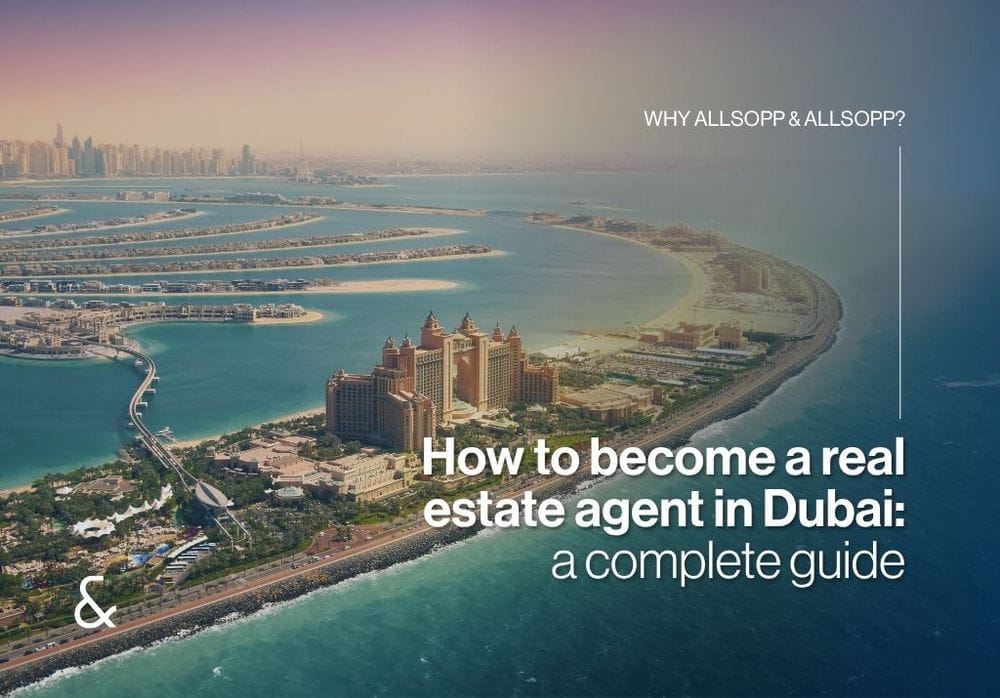
Dubai's property market is one of the most dynamic in the world - and for the people working in it, the rewards can be extraordinary. Whether you're new to the UAE or have been here for years, making the move into real estate is a decision that can genuinely change your career trajectory. But where do you start?
This guide walks you through everything you need to know about becoming a real estate agent in Dubai - from the legal requirements and licensing process, to what your first few months will actually look like on the ground.
Understanding the regulatory landscape
Dubai's real estate industry is regulated by the Real Estate Regulatory Agency - better known as RERA, which operates under the Dubai Land Department (DLD). Before you can legally buy, sell, or lease property on behalf of clients in Dubai, you need to hold a valid RERA broker licence.
This isn't a formality. RERA licensing exists to protect buyers, sellers, and the market as a whole. It means that every agent working in Dubai has met a minimum standard of knowledge and professionalism - and that's actually one of the things that makes Dubai an attractive market to work in.
Step 1: Complete the RERA broker training course
The first step is enrolling in the RERA-accredited Certified Training for Real Estate Brokers course, delivered through the Dubai Real Estate Institute (DREI). This is a four-day programme that covers UAE property law, real estate practices, ethics, contracts, and the DLD registration process.
The course is available in English and Arabic, and sessions run regularly throughout the year. You'll need to bring your Emirates ID or passport, and if you already have a degree, you may be eligible for a reduced fee.
Cost typically ranges from AED 3,000 to AED 4,000 depending on the institution and whether you're a UAE national or expatriate.
Step 2: Pass the RERA exam
After completing the training, you'll sit the RERA certification exam. It's a multiple-choice format covering the material from your course - property law, brokerage regulations, ethics, and market practice.
Most candidates who complete the training and spend time reviewing the material pass on their first attempt. If you don't pass, you can resit. The pass mark is 85% for those without a degree, and 75% for degree holders.
Once you've passed, you'll receive your RERA exam result certificate - which you'll need for the next step.
Step 3: Register with the Dubai Land Department
With your exam certificate in hand, you register with the DLD to receive your official broker card. This requires submitting your Emirates ID, passport copy, exam certificate, and a passport photograph, along with the registration fee.
Your broker card is your licence to operate. It needs to be renewed annually, and you'll need to complete continuing professional development (CPD) hours each year to keep it active.
Important: if you're moving to Dubai specifically for a real estate career, your visa will typically be sponsored by the brokerage you join. Most established agencies handle this as part of their onboarding process.
Step 4: Join the right brokerage
This is arguably the most important decision you'll make at the start of your career. Your brokerage determines the leads you receive, the training you get, the tools you have access to, and the brand you're selling under - all of which directly affect how quickly you can build a client base and start earning.
Not all brokerages are equal. Look for one with a strong marketing presence, a structured training programme, proven tech infrastructure, and a culture that invests in its agents - especially in your first year.
At Allsopp & Allsopp, we've built a business specifically designed to help agents succeed from day one. Since 2008, we've placed more than 400 agents across sales, lettings, and commercial - and our training programme is designed to get new agents deal-ready as quickly as possible.
What to expect in your first 90 days
The first three months are a learning curve - and that's completely normal. You'll be getting familiar with the market, building your knowledge of communities and developments, making calls, attending viewings, and working to close your first deal.
The agents who succeed fastest tend to share a few common traits: they treat the job like a business from day one, they're consistent in their activity, and they aren't afraid to ask questions. Real estate in Dubai rewards effort and persistence - the ceiling for high performers is genuinely high.
It's also worth knowing that commission-based income means your first paycheck may take a few weeks. Going in with some financial runway gives you the space to learn without pressure.
Is real estate in Dubai right for you?
If you're motivated by performance, comfortable with people, and looking for a career with real earning potential in one of the world's most exciting property markets - the answer is probably yes.
Dubai's market is international, fast-moving, and genuinely meritocratic. The agents who put in the work see the results. And with the right brokerage behind you, the pathway from new agent to high performer is well-trodden.
Thinking about starting your real estate career in Dubai? Find out more at careers@allsoppandallsopp.com.