
Tuesday 23 June 2026Tuesday 23 June 2026
/
Share
Relocating To Dubai To Work In Real Estate: What You Need To Know
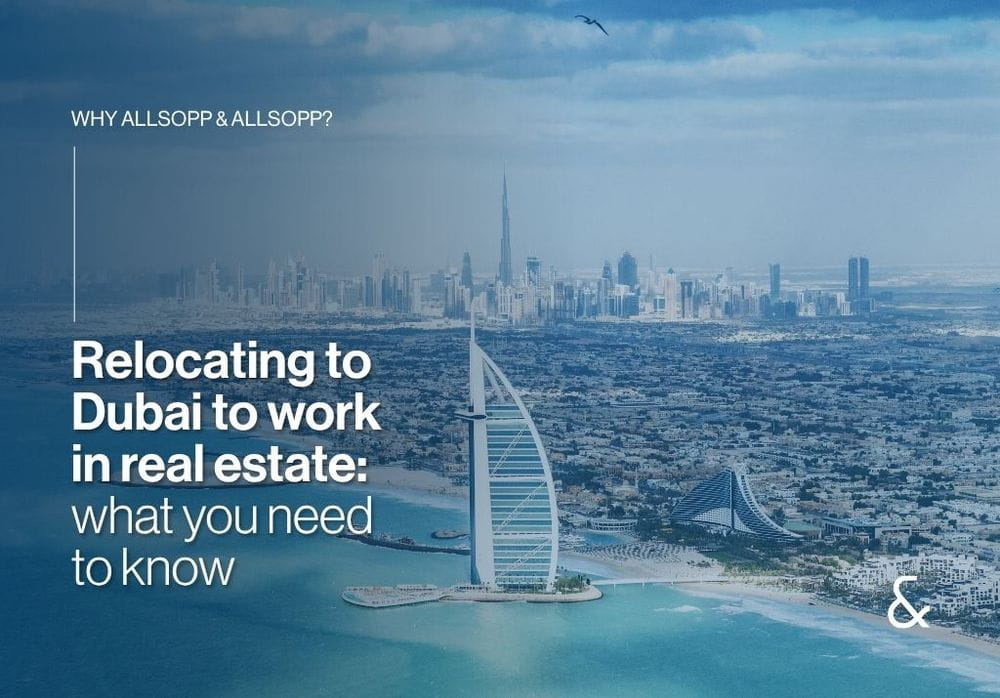
Every year, thousands of people make the decision to relocate to Dubai for a career in real estate.
They come from the UK, Australia, South Africa, Russia, India, France, and dozens of other countries - drawn by a combination of the market opportunity, the lifestyle, and the tax-free earning potential.
If you're considering making that move, this guide is written specifically for you. We'll cover the visa process, the cost of living, the career pathway, and the practical things you need to know before you land.
Why Dubai, and why now?
Dubai's real estate market has experienced remarkable growth over the past several years. Transaction volumes have broken records, new communities are emerging across the emirate, and international investor interest has surged - particularly from European and Asian markets.
For agents, this translates to a large and active deal environment. The population is growing, the rental market is strong, and the off-plan pipeline from major developers keeps new product flowing consistently. For people who are willing to build their career here properly, the opportunity is as good as it has ever been.
The tax-free income is a significant factor too. An agent earning AED 600,000 in Dubai keeps all of it. The same gross income in the UK would result in a considerably lower net figure after income tax and national insurance.
Visa and residency - how it works
The most common route for real estate agents relocating to Dubai is employment visa sponsorship through their brokerage. When a brokerage hires you, they apply for a work permit and employment visa on your behalf - covering the cost of the application, the medical fitness test, and the Emirates ID registration in most cases.
The process typically takes two to four weeks from the point of an offer. You'll need to provide your passport (with at least six months' validity), educational certificates (attested), and passport photographs.
Once your visa and Emirates ID are in place, you're a legal resident of the UAE - which opens up a bank account, a UAE driving licence, and access to the full range of resident services.
Some agents also explore the UAE freelance permit or golden visa routes depending on their circumstances - but for most people starting in real estate, the employment visa through a brokerage is the simplest path.
Cost of living: what to budget
Dubai has a reputation for being expensive - and in some areas, that's fair. But it's more nuanced than the headlines suggest, and for professionals earning well, the maths tends to work out favourably.
Accommodation is the biggest expense. A one-bedroom apartment in a central area (Downtown, Business Bay, JBR) typically rents for AED 80,000 to AED 130,000 per year. Further out - Jumeirah Village Circle, Dubai Silicon Oasis, Mirdif, you can find good quality apartments for AED 45,000 to AED 70,000.
Beyond rent, daily life, groceries, dining, transport and is broadly comparable to major Western cities, though eating out can be very affordable at the mid-market level. Healthcare is covered by mandatory employer health insurance.
One important practical note: rents in Dubai are typically paid in cheques covering one to four months each, paid upfront at the start of the tenancy. Having three to four months' rent available as a float before you arrive is sensible planning.
Getting your RERA licence as a new arrival
Your RERA broker licence is a legal requirement to operate in Dubai real estate, and you'll need to get it done early. The process involves a four-day training course through the Dubai Real Estate Institute and a written exam - the whole thing can be completed within a few weeks of arriving.
Many brokerages including Allsopp & Allsopp support new hires through the RERA process as part of their onboarding, which means you're guided through the steps rather than navigating them independently.
What to look for in a brokerage as a new arrival
When you're relocating, the brokerage decision carries extra weight. You're not just choosing a place to work you're choosing the infrastructure that will support you while you find your feet in a new city and a new market.
Prioritise brokerages with strong onboarding programmes, visa sponsorship, structured training, and a culture that invests in new agents rather than simply adding to headcount. Ask how they support agents who are new to Dubai specifically and listen carefully to the answer.
At Allsopp & Allsopp, we've welcomed agents from all over the world since 2008. We know what the relocation process involves, and we've built a support structure designed to make the transition as smooth as possible so you can focus on learning the market and building your career.
Thinking about relocating to Dubai to work in real estate? Find out more at careers@allsoppandallsopp.com.